Replaced is quite beautiful, though.Replaced
Our Rating:
Meh
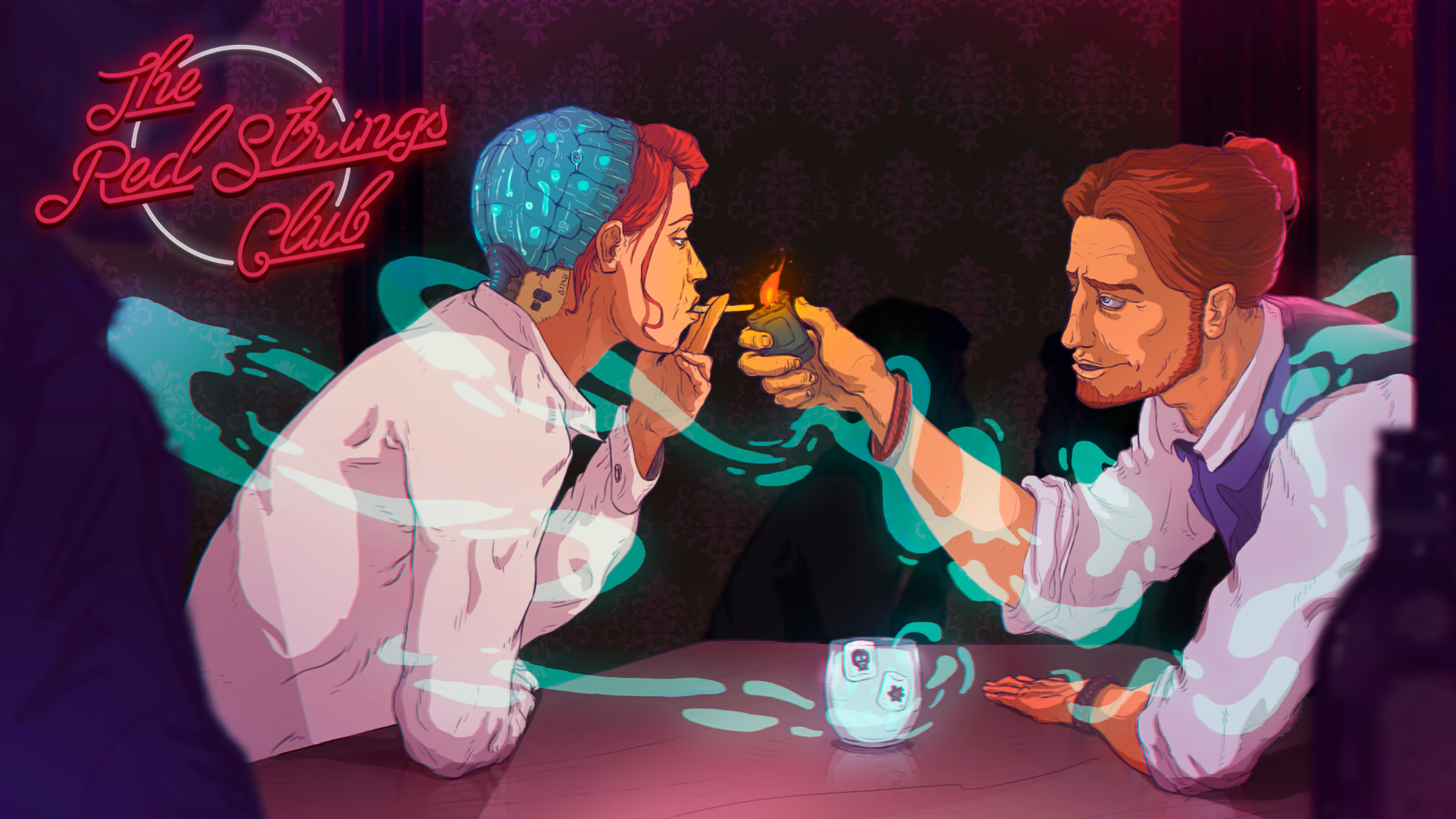
Replaced is quite beautiful. The framing of the scenes, the buildings in the background, and especially the striking use of lightning and depth can all make us gasp in wonder. The HD-2D pixel art is atmospheric, and the environments are all incredibly detailed, layered, and bustling with life. We fully believe in Replaced’s world and are immersed in it just by watching the game for a couple of minutes. But then we have to play the darn thing.
Let’s get something out of the way: this is not a stab at Replaced’s genre, which is a mix of cinematic platformers and point-and-click adventures. These genres usually offer deliberate, slow-paced experiences, yes, but they are rarely boring: their stories are engaging, their set-pieces are intricate, their puzzles are imaginative, and so on. Replaced, however, well… Replaced is boring.


Let’s start with the story. Once upon a time, there was a sentient AI who didn’t know humanity is, in general, and if we are being kind, a piece of shit. Unfortunately for them, they get trapped inside a human body after an accident – they told their creator he was not emotionally stable, and the man proceeded to react in a calm and relaxed manner, exactly like emotionally unstable people are known to do: it didn’t take 5 minutes for the lab to be on flames and the roof to crumble down. This AI is called Reach, and before all hell broke loose, their job was to analyze human databases to see potential matches regarding organ donors. Now, they want to find a way out of the human carcass they embody.
When we escape the lab, we are immediately hunted by cops and private security, which confounds Reach: why are people so violent, so keen to harm others without a second thought? Apparently, nobody has ever fed this AI with anything we have ever produced: imagine Reach’s reaction in finding out that the most common action in a video game – the way we interact with its world and characters – is to attack things.
Replaced is no different, after all. It has a combat system that exists simply because killing things is fun: its purpose is not to suit the narrative in any meaningful way, but to break the overall glacial pace of the adventure with brief moments of tension. “You are bored,” the game seems to say, “so punch these guys for a couple of minutes.”

Granted, the combat system is simple, but effective. We usually wait for our enemies to make their move to deploy the necessary countermeasure: if there’s a yellow sign before an attack, we can counter it with the counter button. If someone is shooting at us, we can parry the shot when their line of sight is red, using the parry button. And so forth. In the meantime, we use the regular attack button to deal some damage and build a special meter that lets us use a finisher against someone. Combat encounters, then, are quite reactive and, much like the Arkham games, punish impatient people who want to land just a few more regular punches before pressing the counter or parry button. New mechanics are added frequently, too, turning Reach into an unstoppable killing machine by the end of the game – a potential problem/danger the story never comes close to properly tackling.
You see, Replaced’s narrative is all over the place in terms of themes. It completely drops the question of humanity’s tendency to violence after the first couple of hours, it doesn’t care about Reach’s own violent behavior, and it pushes us to empathize with the AI (the goal is to paint Reach as that “other” who has to conceal their own identity, lest people see them as monstrous) while also framing one enemy faction as irredeemably monstrous.
When we come across these people called Termites, our new friend Tempest – a rebellious youth with the heart of gold – teaches Reach that we don’t have to worry about murdering them: “Don’t see Termites as humans, dude. They’re violent scumbags,” he says in clear, worrying terms that, in any coherent story about alterity, would be a bright red flag. In Replaced, however, Tempest’s lesson is the unquestioned truth of things.

The Termites’ very name deprives them of humanity: they’re base, destructive animals, one-dimensional in their wickedness. The narrative, then, provides only evidence to support Tempest’s claim. We find some Termites casually grilling a human body, we discover a “Corpse Butchering Guide” among their things, and we recover a diary where one Termite says life is good because… he’s just got some slaves. Although they’re human beings, the Termites display no hint of humanity.
Tempest himself is part of a group called Disposals. They are a people with no rights, living in a makeshift community outside the big walled city of Phoenix, amongst the ruins of “the old world” – the decayed, crumbled buildings of a post-apocalyptic scenario. People in the city see the Disposals just as Tempest sees the Termites: as less than human, hence their name. But the parallel with the Temites escapes them all – characters and writers alike.
But the greatest sin of Replaced’s narrative is that the writing is quite bland. The dialogue is rife with exposition, lacking rhythm, metaphors, and personality. “He will not give over the battery easy, Warren,” Reach says, stating the obvious about the leader of the Termites. It’s cute that Reach talks to Warren in most of his lines – Warren is the emotionally unstable guy whose body he’s possessing – but Reach is rarely given something interesting to say.
The lack of voice acting also hurts Replaced, as the game’s cutscenes seem built for it: the camera is always moving during them, usually slowly panning around or closing in on the action, but the camera movement is tied to the text. Since there’s no voice acting, this means that when we finish reading the text, we must patiently wait until the next one appears, since pressing A to move to the next line leads to a jarring cut, teleporting the camera to where it would have been during that specific line if we had not skipped ahead. In other words, the cinematic framing requires the timing of someone voicing the lines to match the camera movement, but there are no voices to be found.

All this time waiting for the next line does no favors to the game’s pacing, which already suffers from other issues. Levels, for example, usually overstay their welcome, offering little to no surprises as they drag along for almost an hour, pushing us to the next combat encounter, set piece, or straightforward platform section or puzzle. This is especially problematic at the beginning, where puzzles amount to just pushing a box or crate next to a high ledge, while the platforming amounts to just waiting for some vents to turn off before jumping to the next ledge or pole.
This is they key issue plaguing Replaced: it keeps shifting gears, making us go from a combat encounter to a stealth section (hiding in bushes from drones), then to a point and click puzzle in the city (acquiring some items for certain characters), then to platform sections, then to 8-bit arcade minigames, then to the next combat encounter and so forth… and it forgets that all these activities must be engaging by themselves. Everything in Replaced is too simple, too by-the-book, to sustain such long-ass levels. There’s a specific number of crates we can push around before the action gets stale, after all, and that number – although variable from person to person to termite – is never high.

The music could have helped impart some energy to the proceedings, but outside of the Disposal town – where a haunting melody paints their situation with the appropriate dose of melancholy – it’s almost imperceptible: we hear just the diegetic sounds of the environment or a low, generic ambient music. The bizarre thing, the thing that boggles the mind, is that there’s great music in Replaced. There’s awesome music in Replaced; there’s memorable, beautiful, haunting music in Replaced. They’re just not played in the levels.
For reasons unknown, these tracks are collectibles we find in the game and can listen to on the main menu – and some of them only on the menu. Some of these are eight-minute tracks full of wit and fury, some are smaller ones with great vocals. There’s a very late set piece in the game where we fight some goons on top of a moving train – it’s right there on the game’s cover – where one of these songs plays, and the game finally comes to life with the track. Five minutes later, it’s over, though. So, it’s too little, too late.
Replaced is quite beautiful, though.
- Developer
- Director
- Writer
- Composer
- Average Length
- Available on